

The Lost Lake
Written and Illustrated by Allen Say
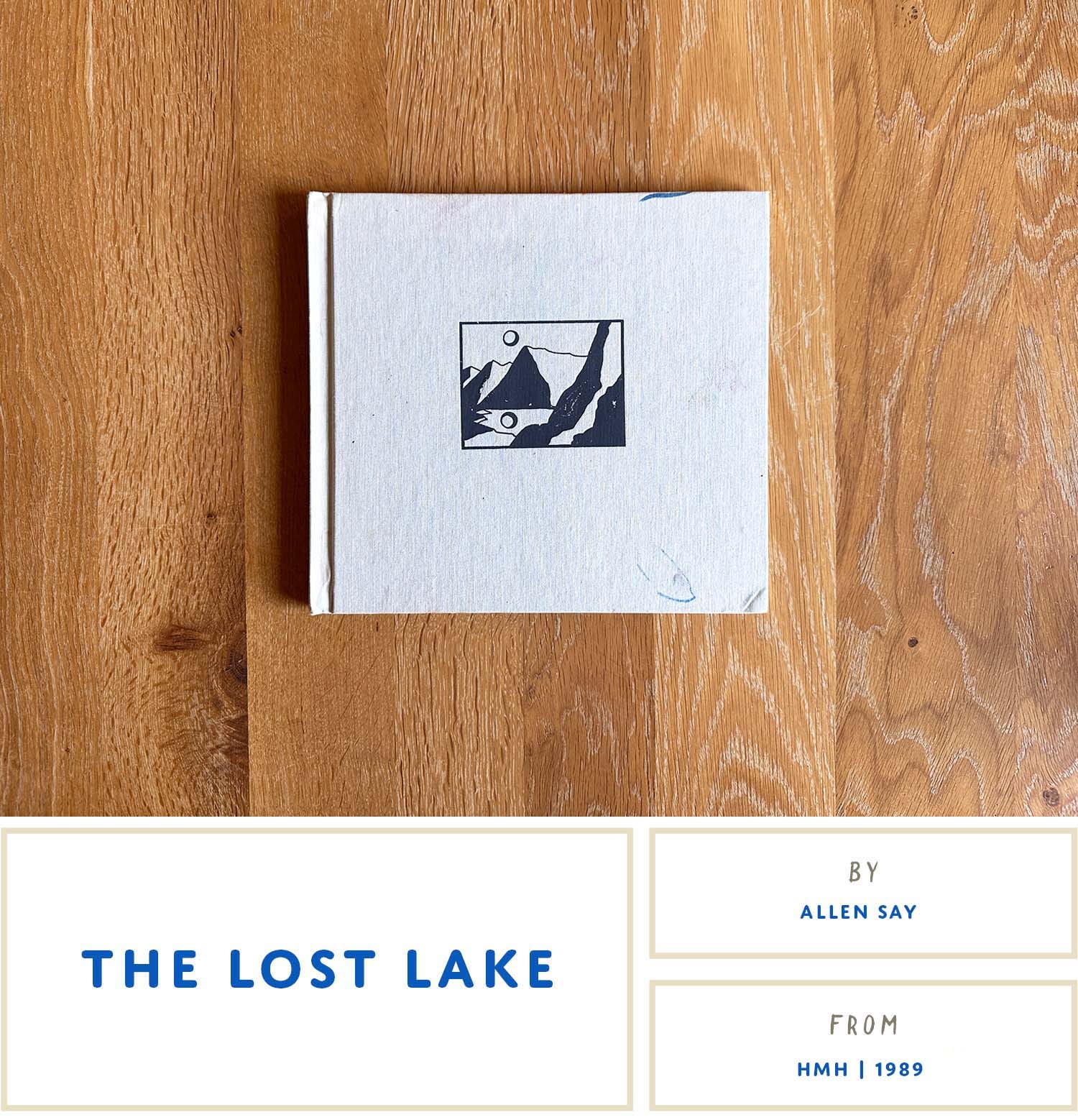
Beyond its incredible watercolors and classic storybook structure, THE LOST LAKE is a treasured favorite because it’s personal—literally. The photographed copy featured in today’s newsletter has been mine since childhood, one of the scant few picture books I’ve been able to save and pass on to my daughter.
The book’s jacket is long gone, its linen-bound hardcover tattooed with marker and pen scuffs. Yet every time I open it, this book casts some kind of spell on me. Maybe it’s the artwork. Maybe it’s the fact that it appears to open in San Francisco; that, even as a child, I had divined I’d end up here as an adult.
Or, maybe it’s the way it confronts how when you’re a kid, adults seem so mysterious and even unapproachable—and how that unwinds in unexpected ways.
(Or maybe it’s the picnic dinner Luke and his father share about halfway through the book. I’m a sucker for descriptions of food in stories, what can I say?)
In any case, for me THE LOST LAKE is an Allen Say must-have, a book whose prose reads almost literary, all wrapped up with a beautiful reverence for the natural world. For a while, this was my go-to baby gift for new parents who were hikers/campers/in any way outdoorsy!
Come discover the magic…

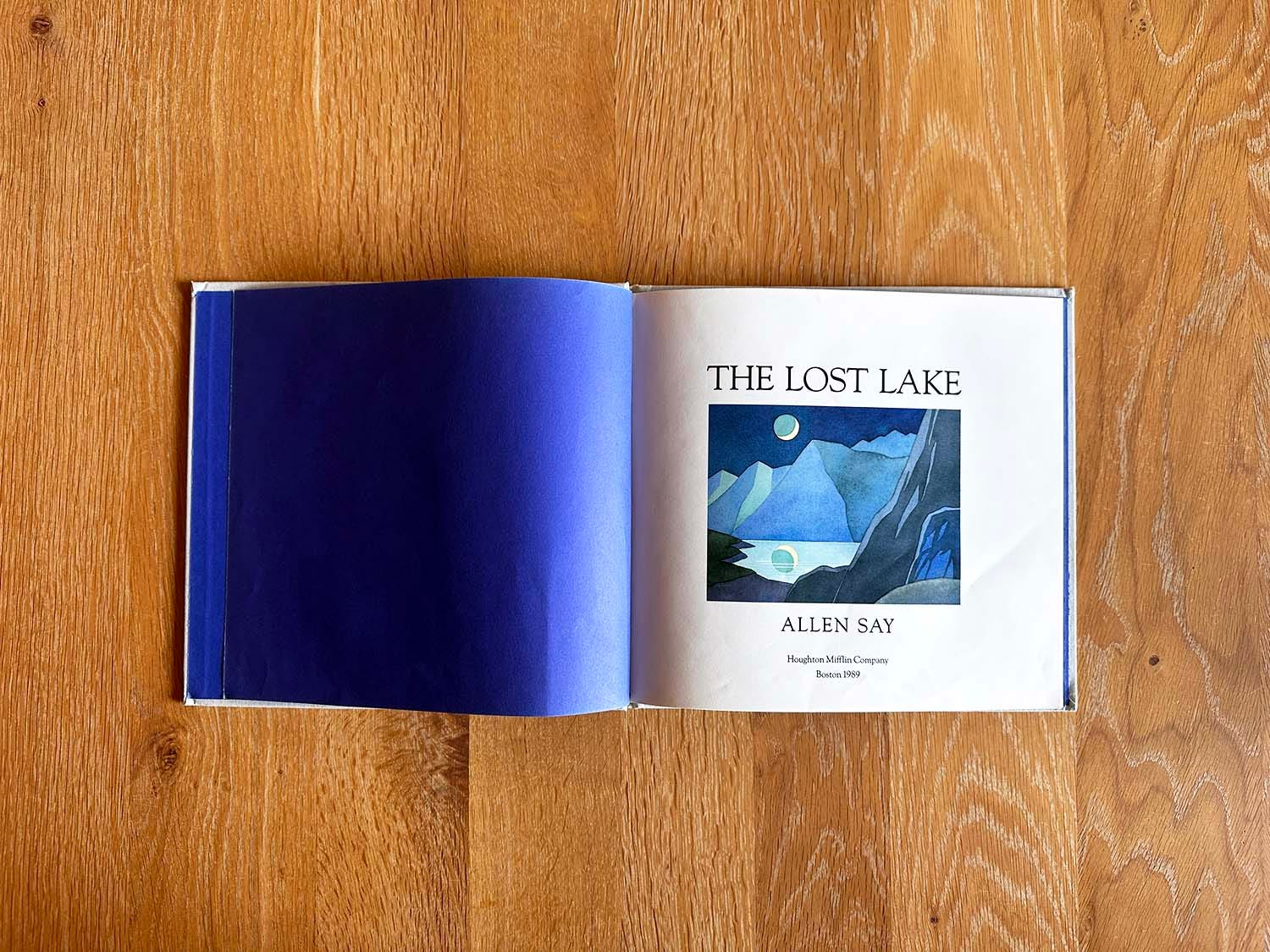
Let the record show that my copy is so old, copyright has changed hands! My hardback version was published in 1989 by Houghton Mifflin Harcourt. These days, if you buy a new copy of THE LOST LAKE, it’ll arrive in paperback, published by Clarion.
To that end, I’m not sure recently published versions will feature the same color of endpapers. But oh, I hope they do! While the original edition features no illustrations, the endpapers are the most incredible Yves Klein/International Klein Blue (IKB). There’s much to say about this particular color of blue, and I could spend an entire newsletter on it (though that’s a totally different Substack). But I will mention this write-up, in which Yves Klein is quoted as saying that “IKB was ‘pure space’ and felt it to contain values far beyond what could be seen or touched.”
With just this single color, so much about our story is communicated with no words or pictures.
And then we open here:
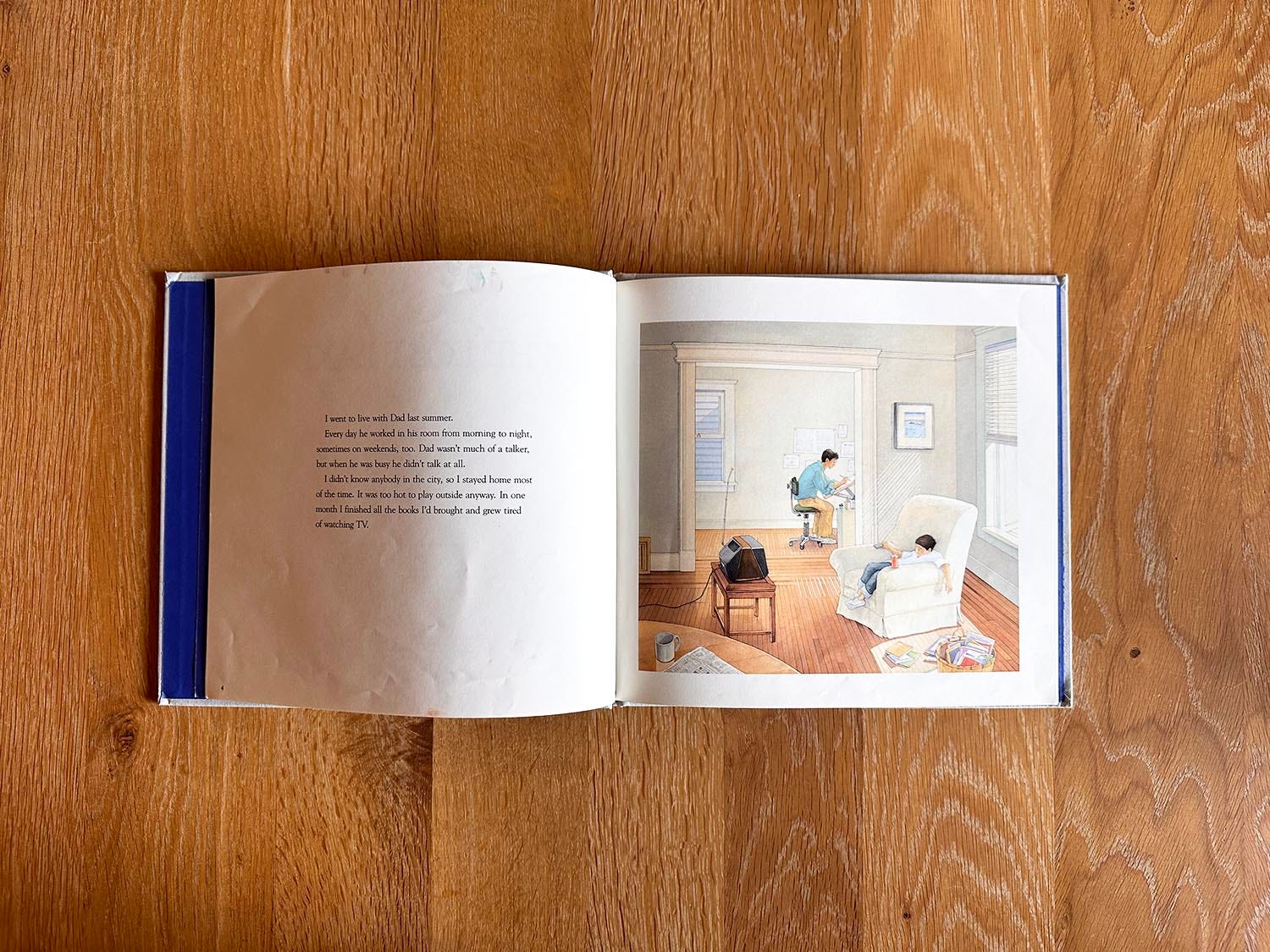
Luke spends summers with his father in what I’m 99.9% certain is a flat in San Francisco. (As a child, I never clocked the narrow hardwood floors and telltale Edwardian features as being a San Franciscan apartment. But cut to 2010 when I was living in a home that looked almost exactly like this, and it clicked!)
An art direction note: This is a wonderfully detailed illustration, but observe the beige-y, greige-y palette—and prepare yourself for a stark contrast by book’s end!
Luke’s father is a designer or artist of some sort, who spends his days silently working while Luke, well, rots. He knows no one in the city, and after finishing all the books he brought with him for the summer, even TV has grown boring.
There’s a spread—not pictured here—in which Luke discovers some old nature magazines in his dad’s flat. In his boredom, he cuts them up, and makes a collage of images on the wall. His father discovers them one afternoon, and studies them intently.
It’s here that with a light hand, Say establishes the uneasiness between father and son:
“Nice pictures,” he said.
“Are you angry with me, Dad?” I asked, because he saved old magazines for his work.
“It’s all right, Luke,” he said. “I’m having this place painted soon anyway.”
He thought I was talking about the marks I’d made on the wall.
This tension always struck me as a kid, though I couldn’t name why. On this side of life, it’s more clear.
Luke recognizes the divide between him and Dad—what he thinks will anger him, what he thinks he cares about—while also not really knowing who his Dad is or what he cares about. What memories exist in him? What inspires him?
To add to this, we don’t know for certain that Luke’s parents are divorced, though the opening line points to it. It amazes me that this many years on, I’m still thinking about the relationship and tension between Luke and his Dad, and what silence must’ve felt like in the apartment that summer.
How much was left unsaid.
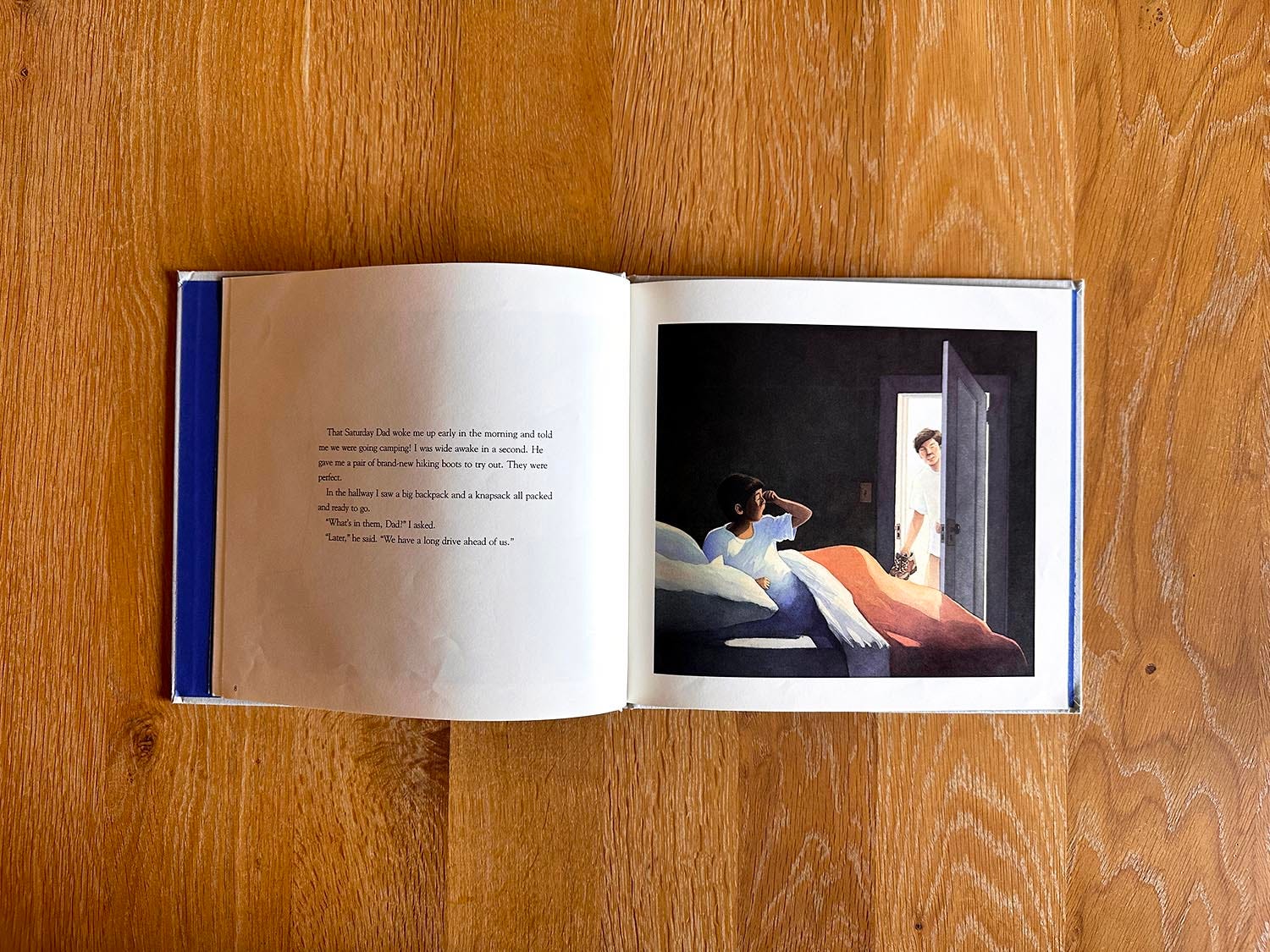
But then, things take an exciting turn. Something in the collage photos inspires Dad, and the next weekend, he wakes Luke early and surprises him…
They’re going camping!

There’s another great spread of Luke and his Dad in the car, heading off on their trip, which features one of my fave moments in the early development of this story and — ah, cripe, let me just snap a less polished photo of it real quick:
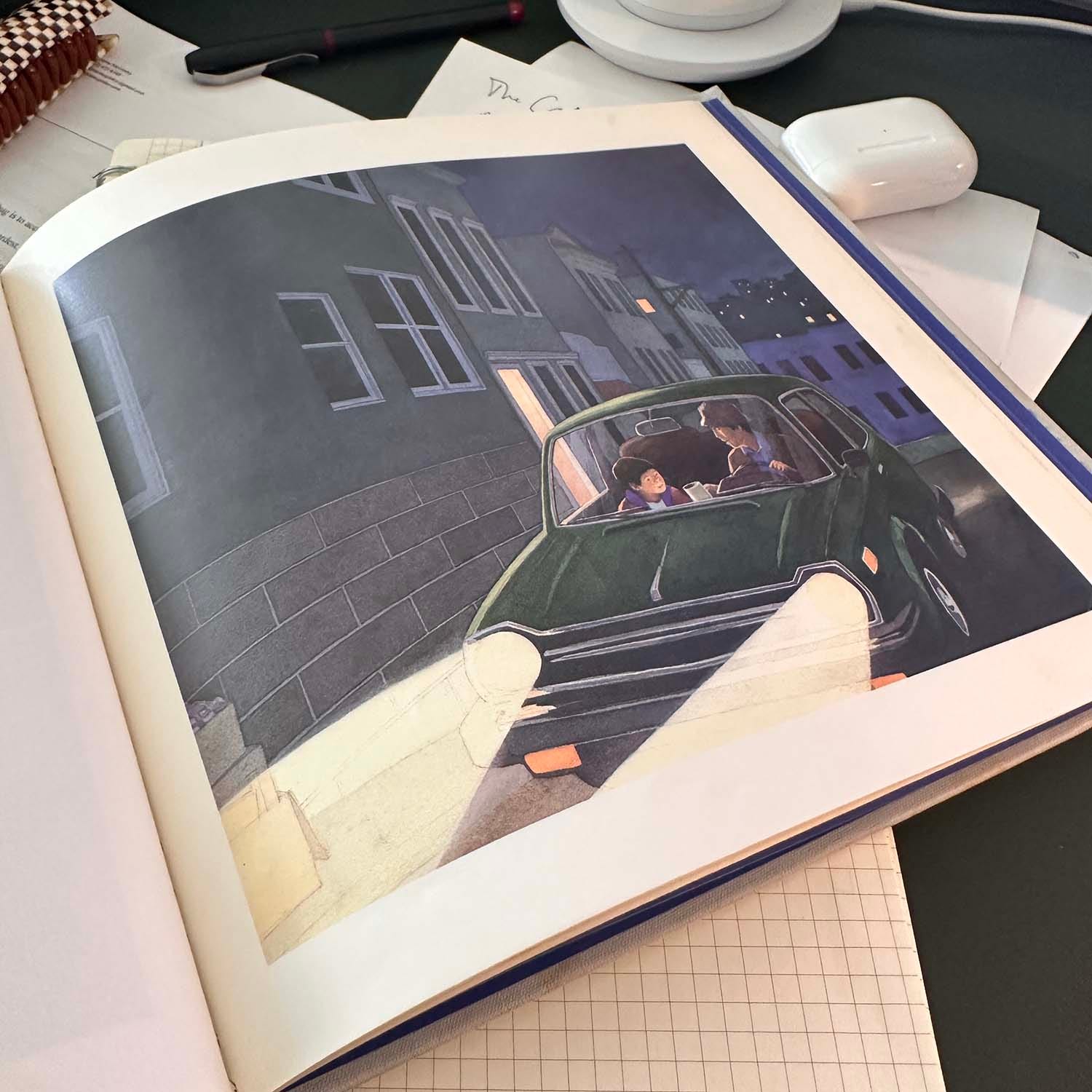
“In the car I didn’t ask any more questions because Dad was so grumpy in the morning."
“Want a sip?” he said, handing me his mug. He’d never let me drink coffee before. It had lots of sugar in it.”
I love this moment. It’s so evocative; it always reminded me of trips to my grandmother’s house, where in the mornings she’d let me have a tiny cup of coffee with about two tablespoons of sugar heaped into it. Here again, Say addresses the divide that exists between child/parent as well as the way parents surprise or even delight us. And perhaps more importantly, how they begin to acknowledge that we’re no longer babies; that we can handle grown up things and understand parts of their world.
The coffee moment is such a subtle but beautiful thing, chipping away at the wall between Luke and Dad.
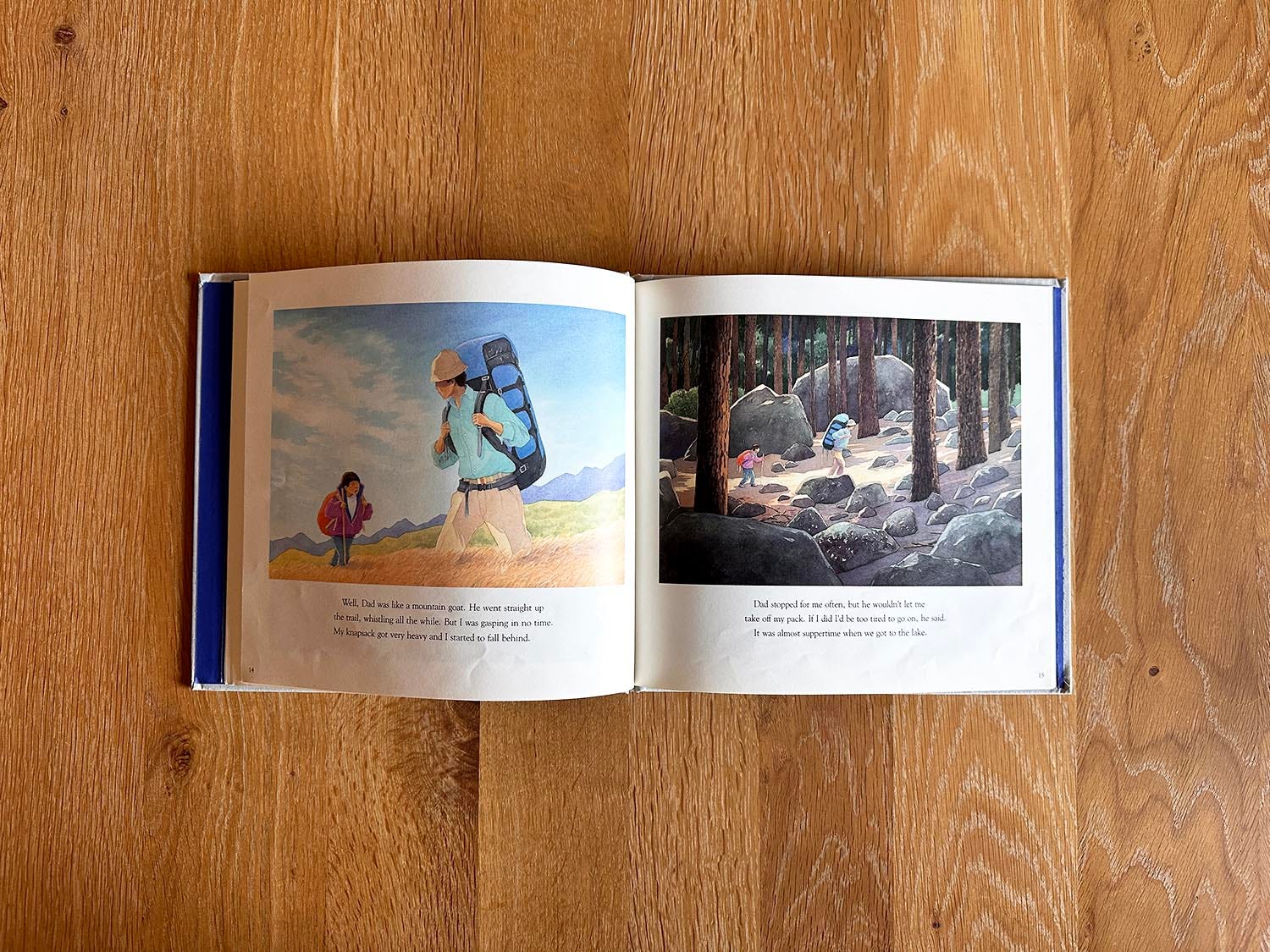
Dad and Luke head off to the foothills, where they hike miles uphill and into forest. Their destination? The Lost Lake, a spot that Dad and Luke’s grandfather discovered when Dad was a kid. “It was our special place,” Dad says to Luke in the car, “So don’t tell any of your friends.”
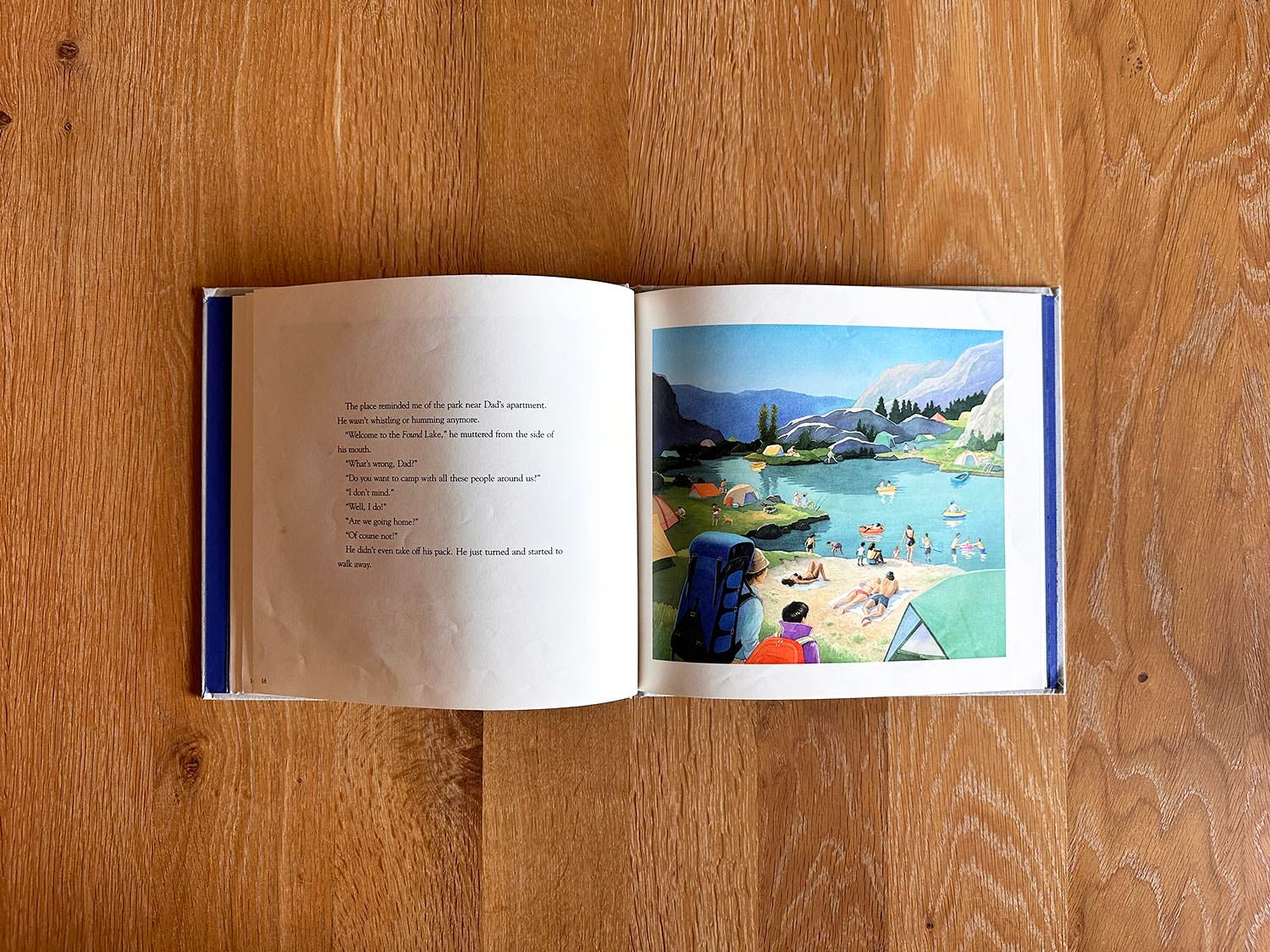
But an unpleasant surprise awaits them at The Lost Lake. It’s been…found!
This image was so arresting to me as a kid—I’m still trying to parse out why, exactly. I loved the mix of colors, and observing all the ways people played, as if it was a seek-and-find. There’s also the juxtaposition of natural beauty with all the people.
But maybe it’s this: Luke and Dad take it all in, and Dad is disgusted by the whole scene. As a kid, this really confused me. Like Luke, I was always trying to figure out why Dad would be so upset by what appears to be so much fun. My childhood lens mirrored our protagonist; now as an adult, I completely understand Dad’s sadness, disappointment and longing. Ain’t perspective everything?
The other thing that strikes me now—not just on this spread but throughout the entire book—is Say’s dialogue construction. It’s practically literary in its lack of dialogue tags! Check this out:
“Welcome to the Found Lake,” he muttered from the side of his mouth.
“What’s wrong, Dad?”
“Do you want to camp with all these people around us?”
“I don’t mind.”
“Well, I do!”
“Are we going home?”
“Of course not!”
No “said.” No “exclaimed.” Just the dialogue. When reading this book aloud, it requires true voice acting. I have no idea whether Say meant to do this or not, but reading dialogue in this book forces the reader to take on each character’s point of view and emotions, and thus, reading it becomes an exercise in empathy. Perhaps that’s true of every fiction book, but in a children’s picture book with very few dialogue tags? Unique!

Ok, so Dad and Luke decide to abandon Plan A. They hike further and further up the mountain, through pouring rain, until night falls. They set up camp for the evening and talk about what to do next. Dad says something that’s as poignant now as it was 35 years ago:
“You know something, Luke? There aren’t any secret places left in the world anymore.”
Still, with Luke’s encouragement, they decide they’ll set out in the morning and hike high up into the mountains in search of their own lake.
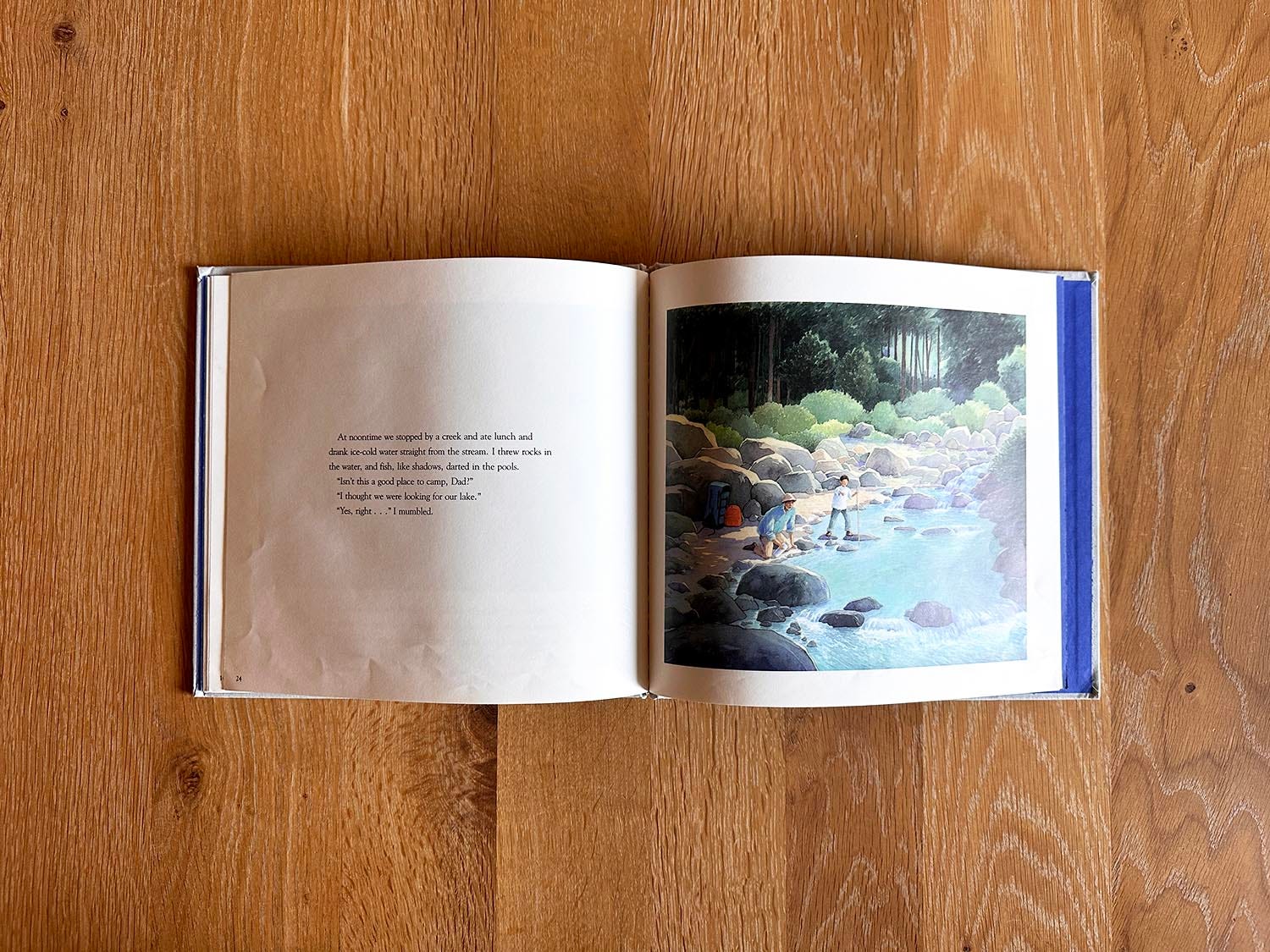
The next day, they stumble upon this gorgeous scene, and eat lunch and drink “ice-cold water straight from the stream.” I wanted to live in this picture as a kid.
They hike, and hike, and hike, through bear-filled forests and long valleys in which it feels as if they’re the only people in the world.
That night, they build a fire, make dinner, and talk some more:
“You know something, Dad? You seem like a different person up here.” Luke tells his father.
“Better or worse?
“A lot better.”
“How so?”
“You talk more.”
“I’ll have to talk more often, then.”
That made me smile. Then I slept.
And in the morning, Luke and Dad awake to this:
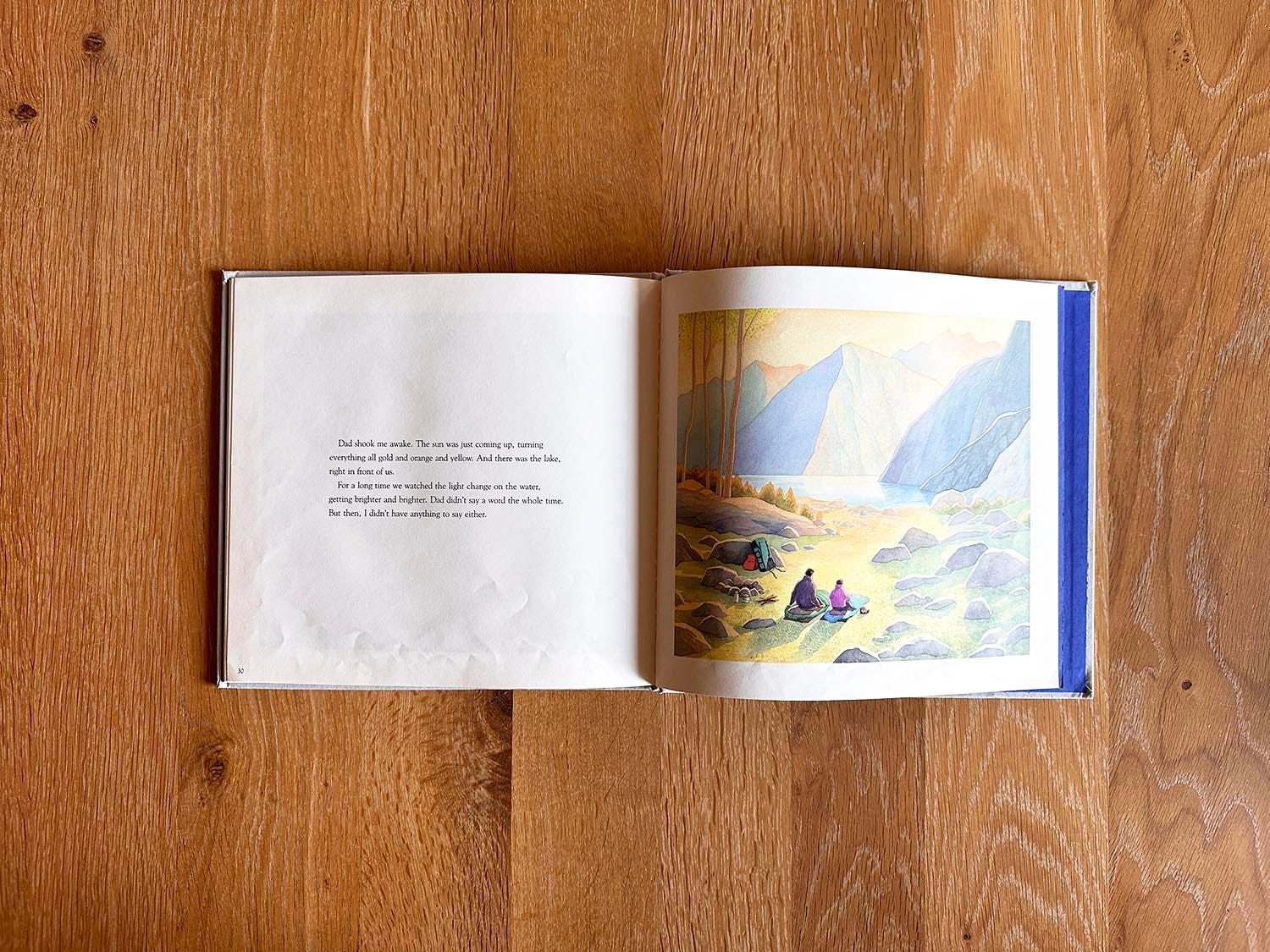
Whew, this image still gets me! I remember marveling at Say’s expertise here, how he knew exactly how to apply colors to render the page absolutely aglow with sunlight. It’s magnificent!
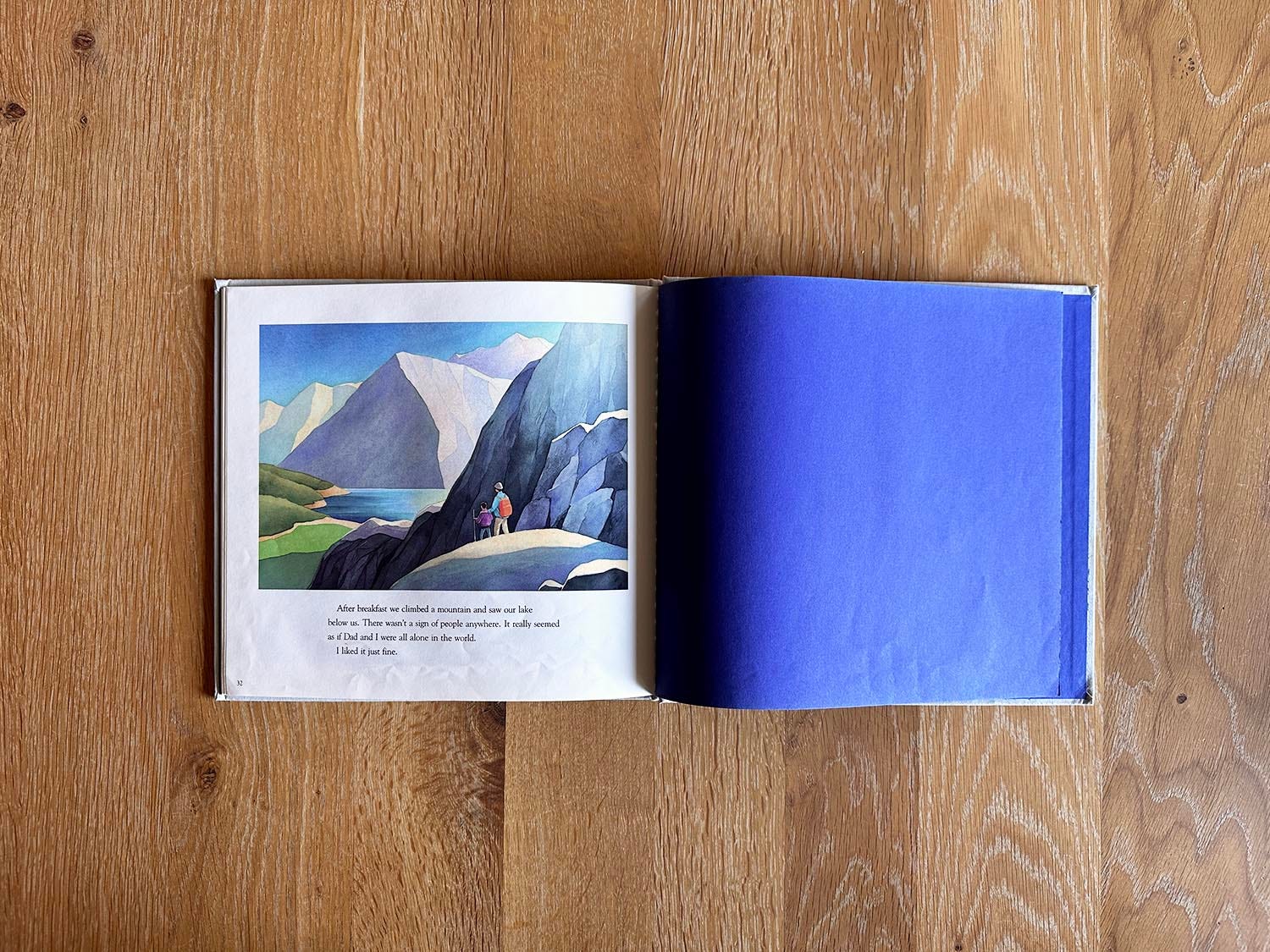
And then, this very special story ends here, with Dad and Luke hiking down to their new Lost Lake, the palette rendered vibrant, saturated and tangible, Dad’s hand placed lovingly on Luke’s shoulder.
“There wasn’t a sign of people anywhere. It really seemed as if Dad and I were all alone in the world.
I liked it just fine.”

Allen Say is a legend, with a massive catalog of books spanning a fifty-plus year career. A full list of them is here; you can also see Publishers Weekly reviews of popular ones here.
On that note, check out their October 1989 review of THE LOST LAKE here!
Heard of Say’s GRANDFATHER’S JOURNEY? That’s his 1993 title that won the Caldecott! Also worth looking at, as it’s just as poignant.
If you are interested in learning more about Yves Klein Blue, check out these resources:
They don’t make ‘em like they used to: A general note that picture books with this kind of word count and approach are a rare thing these days. Revisit the oldies—they’re wonderful!

Support the makers:
Allen Say has been in the game long enough that he doesn’t have (or need!) a website, let alone an Instagram. Give his name a Google search, and dive into to his incredible catalog!
Buy your copy:

New Releases
I’m a sucker for translated PBs, and Emma Adbage’s THE WOUND looks like it’ll be no exception.
OMG, OMG, it’s finally time for A LOST CAUSE, Felicita Sala’s new picture book about a kiddo who always loses everything, then goes on an adventure to recover all his stuff.
Man, there are a LOT of Christmas books hitting stores this week… 😑
What I’ll be checking out from the library:
I’ve put a hold on THE ATLAS OF LANGUAGES: WORDS AROUND THE WORLD, a non-fiction PB that dives into the history of languages with maps and interactive elements.
Of note:
I finally checked out Stephen King’s new HANSEL AND GRETEL, with illustrations from Maurice Sendak. Honestly? Though a lot of the art is interesting, you can definitely tell they were pulled from Sendak’s costume and set design sketches for the opera. Like, if Sendak was illustrating specifically for a PB, the art would’ve been something totally different (and better). King’s prose is good, if tonally uneven at times. (Which might’ve been done to lighten the mood of what is an otherwise very sad, very grim (Grimm?) story—I had forgotten how scary it was!) Worth checking out from the library; I dunno if I’d buy it.

M E T A
In this Post: The Lost Lake by Allen Say
Keywords: Father and son stories, hiking, camping, passage of time, loss, change, disappointment, understanding adults, nostalgia, wilderness, watercolor, tent, survival, divorce