

The Capybaras
Written and illustrated by Alfredo Soderguit
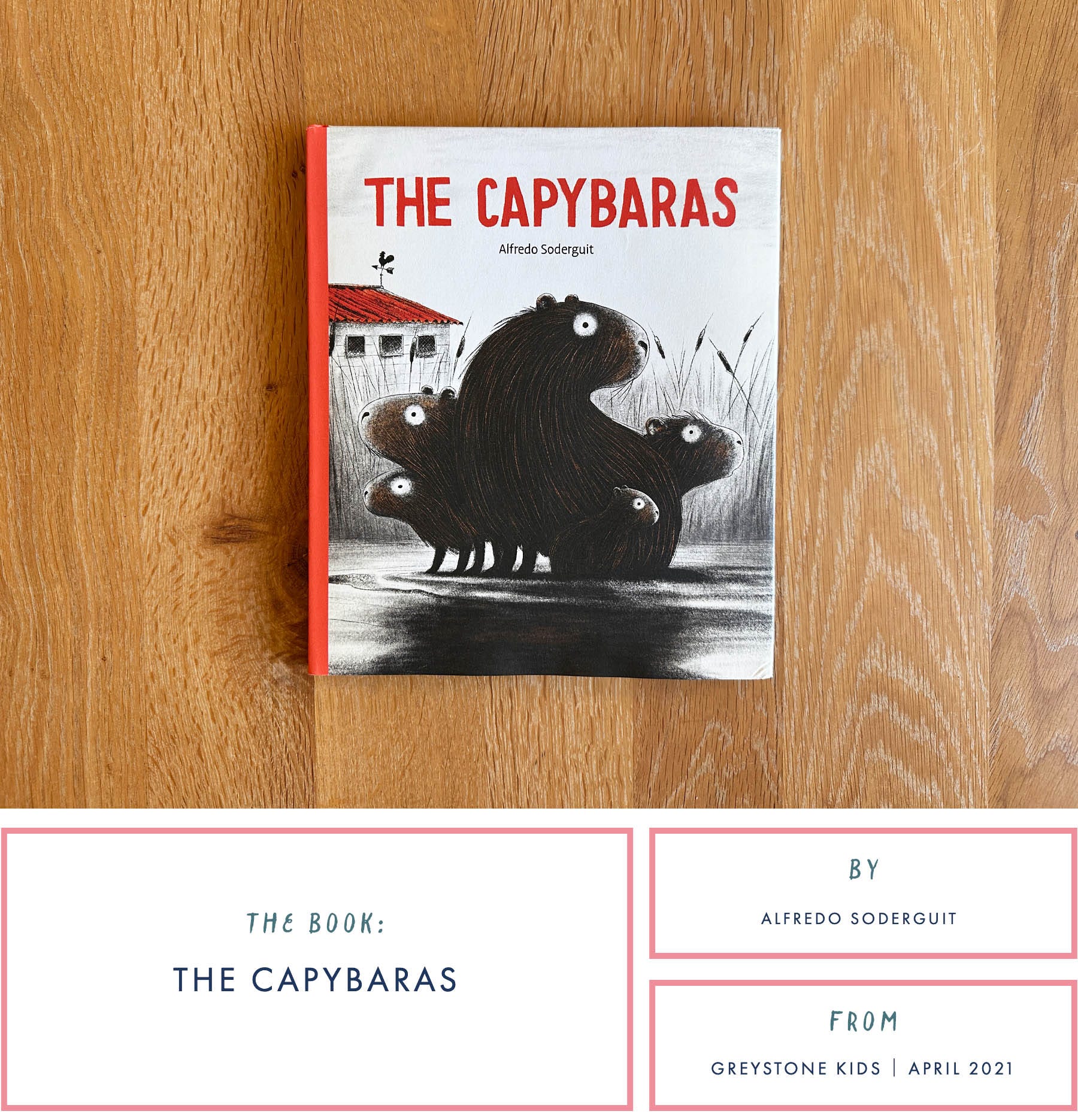
I can honestly say I’d never heard the word capybara until I was well into my 20s. It was a David Attenborough-narrated nature show, and when I heard him utter that funny animal name—cappy-bar-uh—I sat up a little straighter. A WHAT? Then onto the screen crept the most hilarious-looking rodent I’d ever seen, with its flat, disinterested expression and giant snout. I was charmed. Very charmed.
So earlier this year, when I came across this picture book featuring the world’s largest rodents, I had to check it out. And boy was I in for a surprise—a story filled with allegory, humor, and heart. THE CAPYBARAS is about friendship in unexpected places, changing our minds, helping one another, and breaking down biases. Whether intentional or not, it’s also a metaphor for modern migration crises and even wars, all wrapped up in a perfectly paced bedtime story.
Originally written in Spanish by Uruguayan author and illustrator Alfredo Soderguit, and translated into English by Elisa Amado, THE CAPYBARAS is another Greystone Kids/Aldana Libros jam—one of my favorite imprints for sharp, interesting, keep-forever picture books.
Let’s find out what these furry friends are up to, shall we?

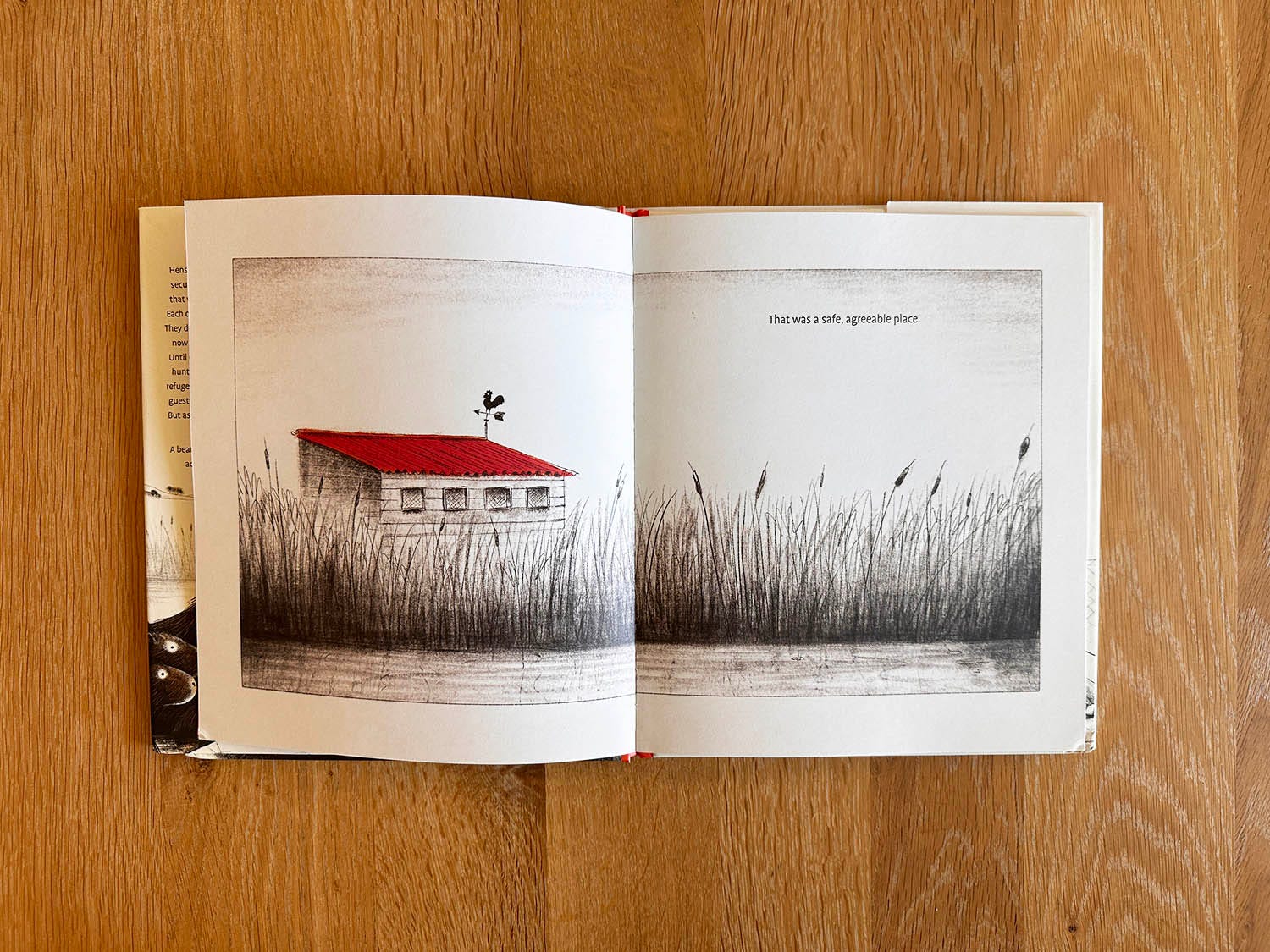
“That was a safe, agreeable place.”
That’s it. That’s the opening line.
And you know what? I love it!
During my first read of THE CAPYBARAS, I flipped the opening page backwards, convinced I’d missed some of the text. But no! With six mostly monosyllabic words, we’re dropped right into the story, opening on a seemingly benign chicken coop set in a grassy marsh.
But then:
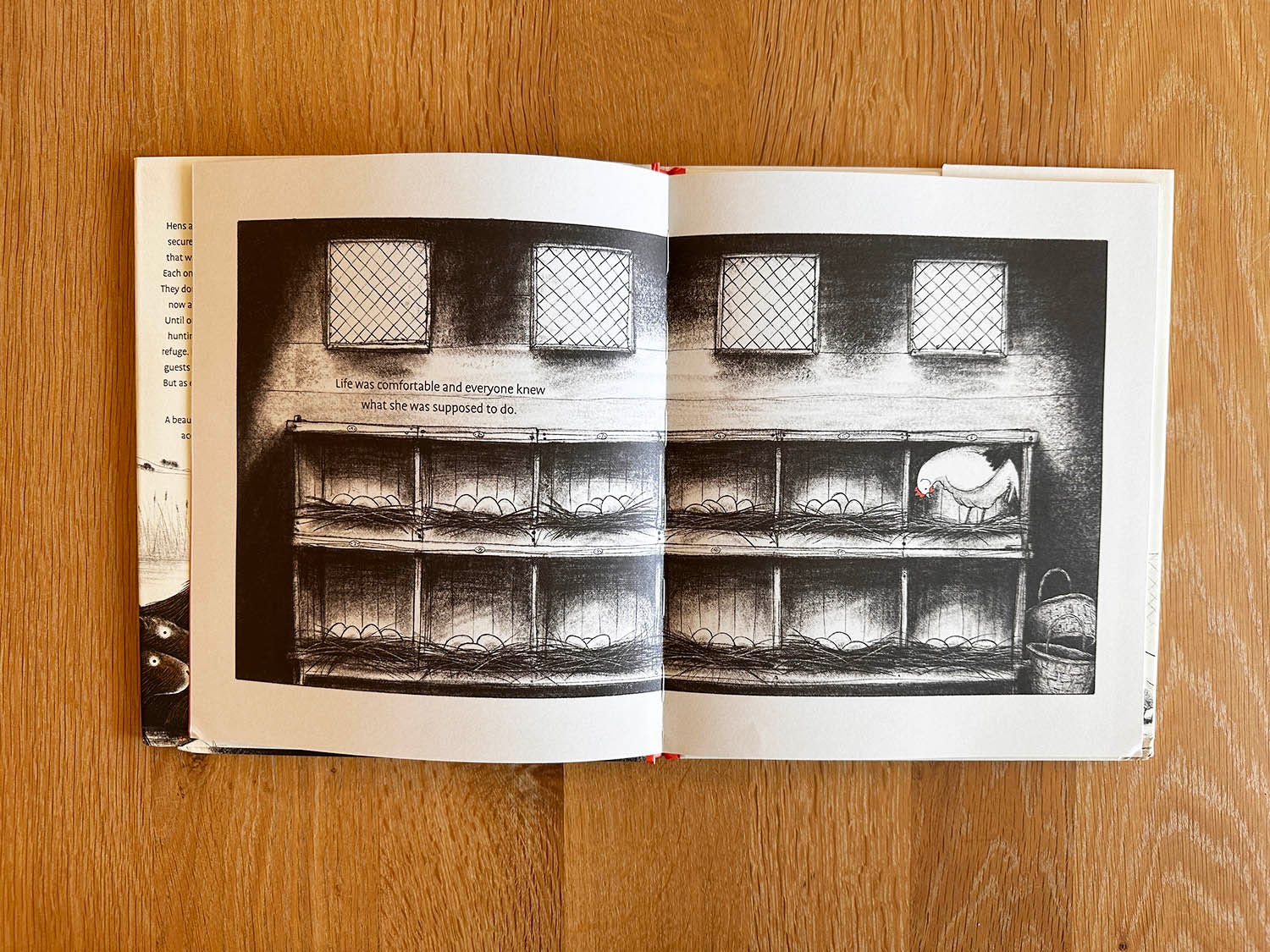
Here’s our first hint that things may not be as agreeable as we’ve been told. (And a perfect example of art injecting a parallel story!) For while the text says “life was comfortable,” the spare black and white illustration with its dark vignetting feels rather prison-like, doesn’t it? Cross-hatched windows and nests-as-jail-cells add to the effect. This is not a place of boundless joy.
Then there’s the fact that the lone hen in the frame has clearly not done what she’s supposed to. No eggs means…
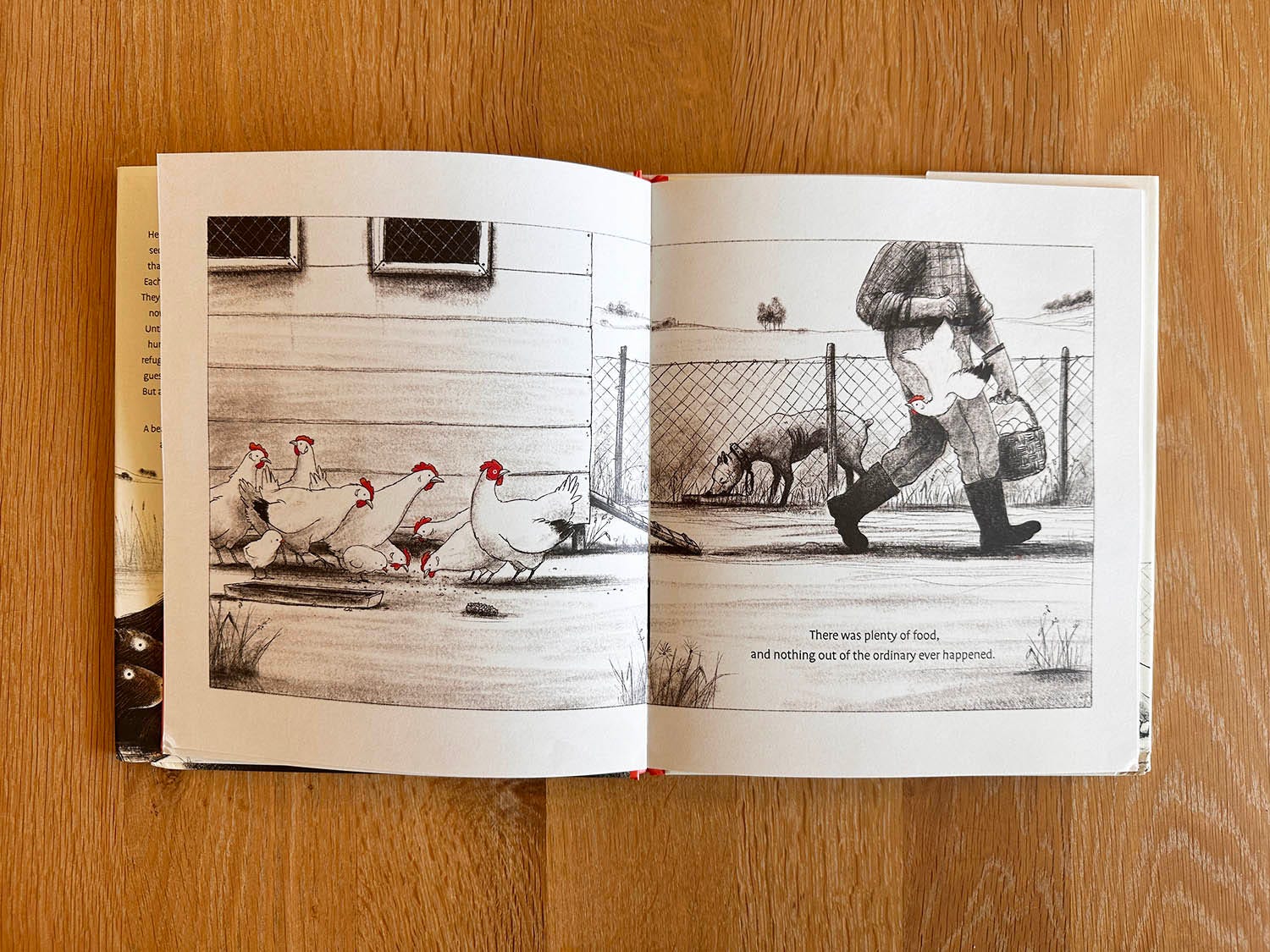
…you get disappeared.
(And again, the text is at odds with the image, ramping up that tension!)
Such is the world the chickens are living in when, out of nowhere, the capybaras arrive.
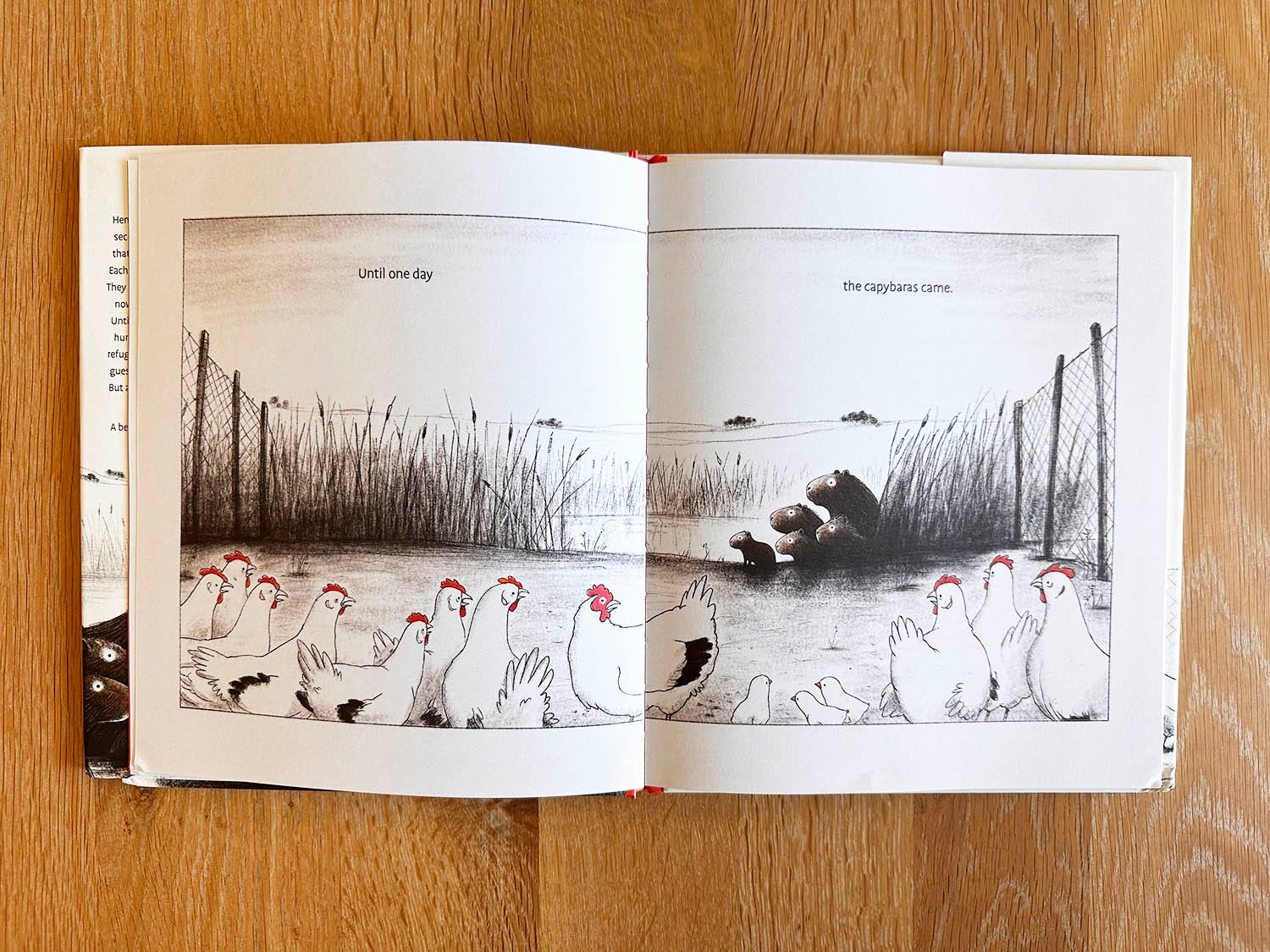

Similar to ON THE OTHER SIDE OF THE FOREST, what immediately struck me on first read was the book’s spare illustrations, rendered in a black, white, grey, and brown palette, with pops of red here and there. The red feels urgent, like a warning, and this choice of single color application adds so much tension to the visuals.
And then there’s the story.
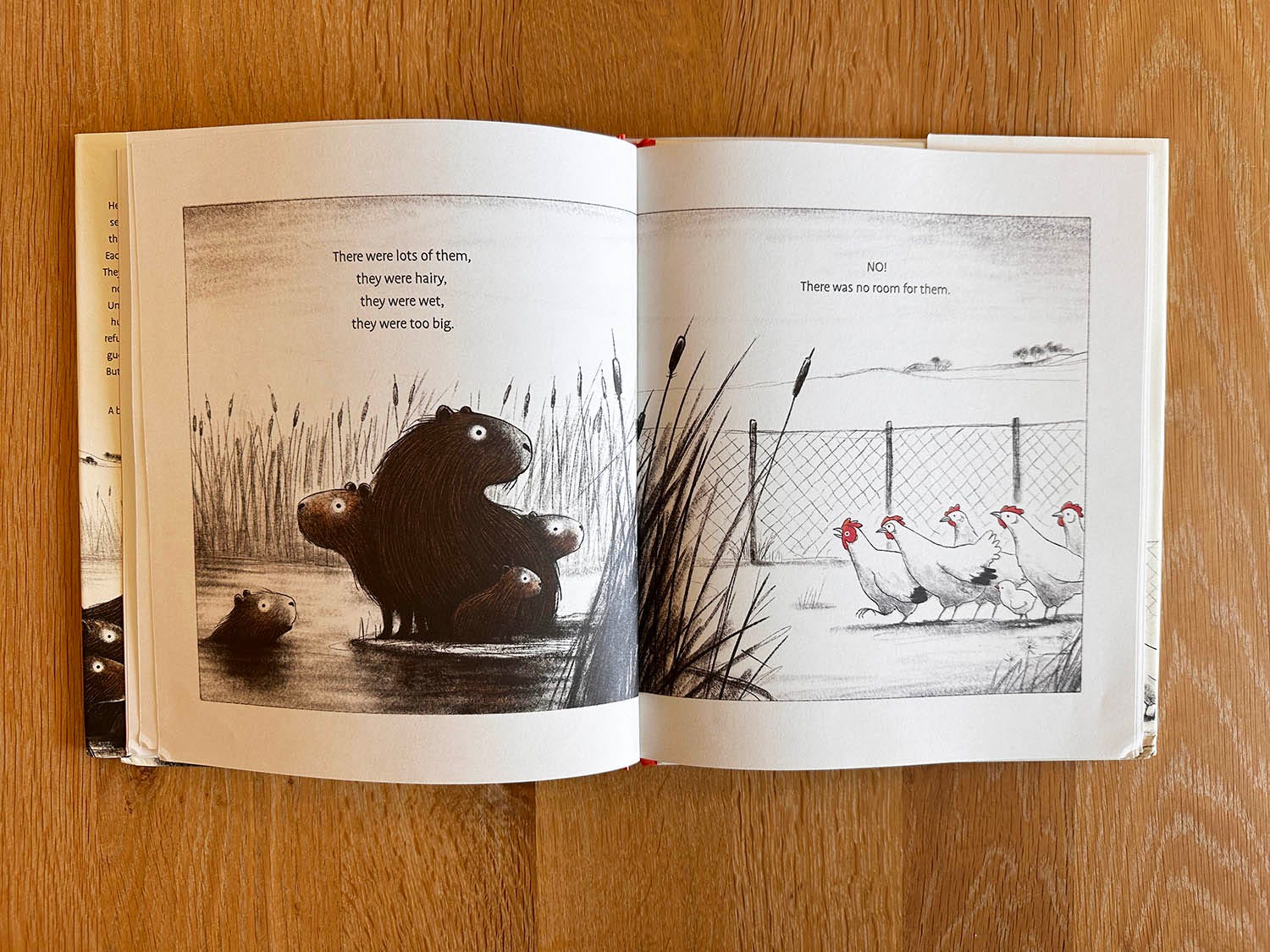
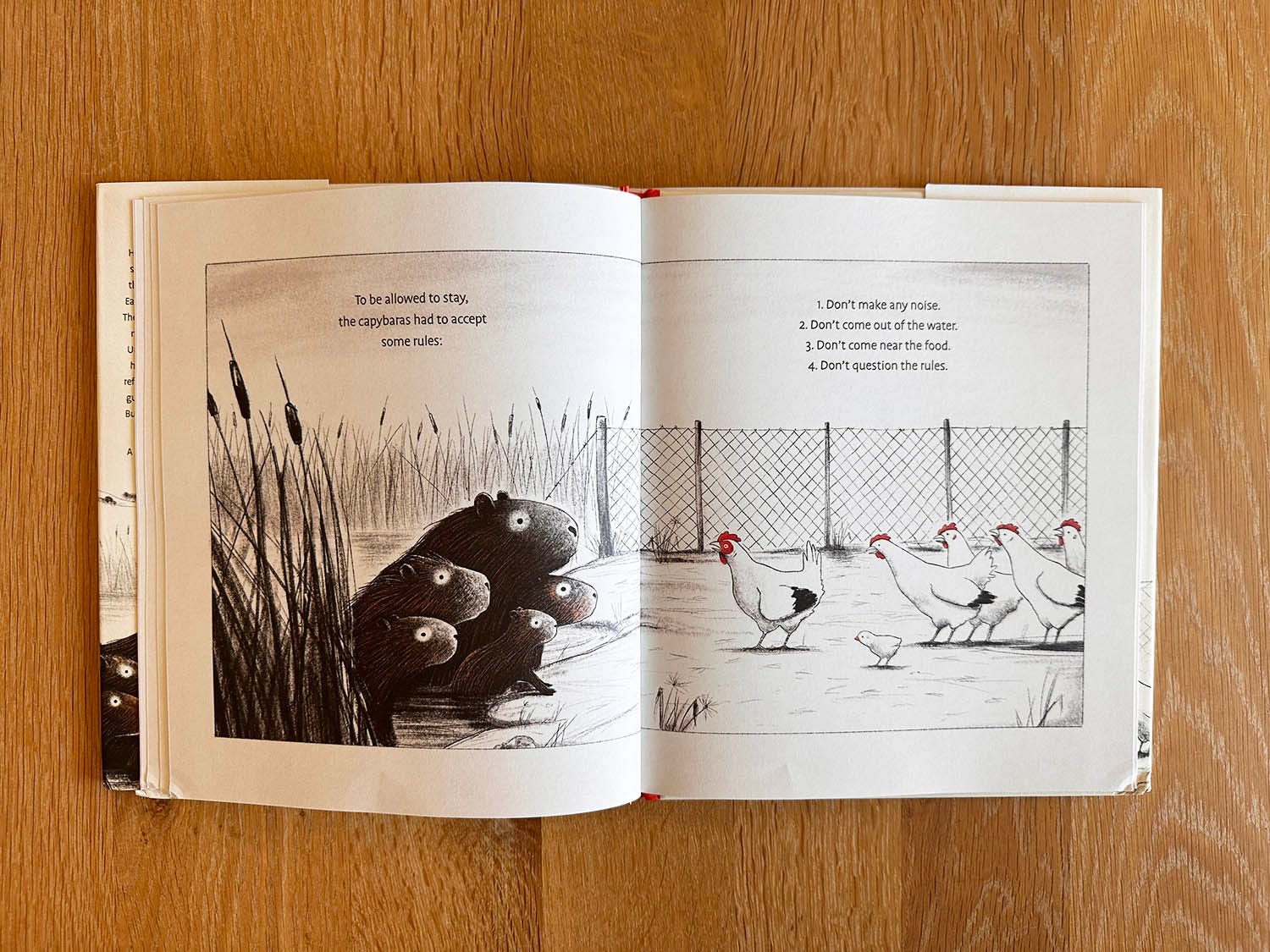
When the capybaras arrive, the hens insist they cannot stay. They’re too hairy. Wet. GIGANTIC. And there’s simply no room for them. If they must stay, they are to follow a set of nearly impossible rules.
Are you picking up on the potential allegory here?
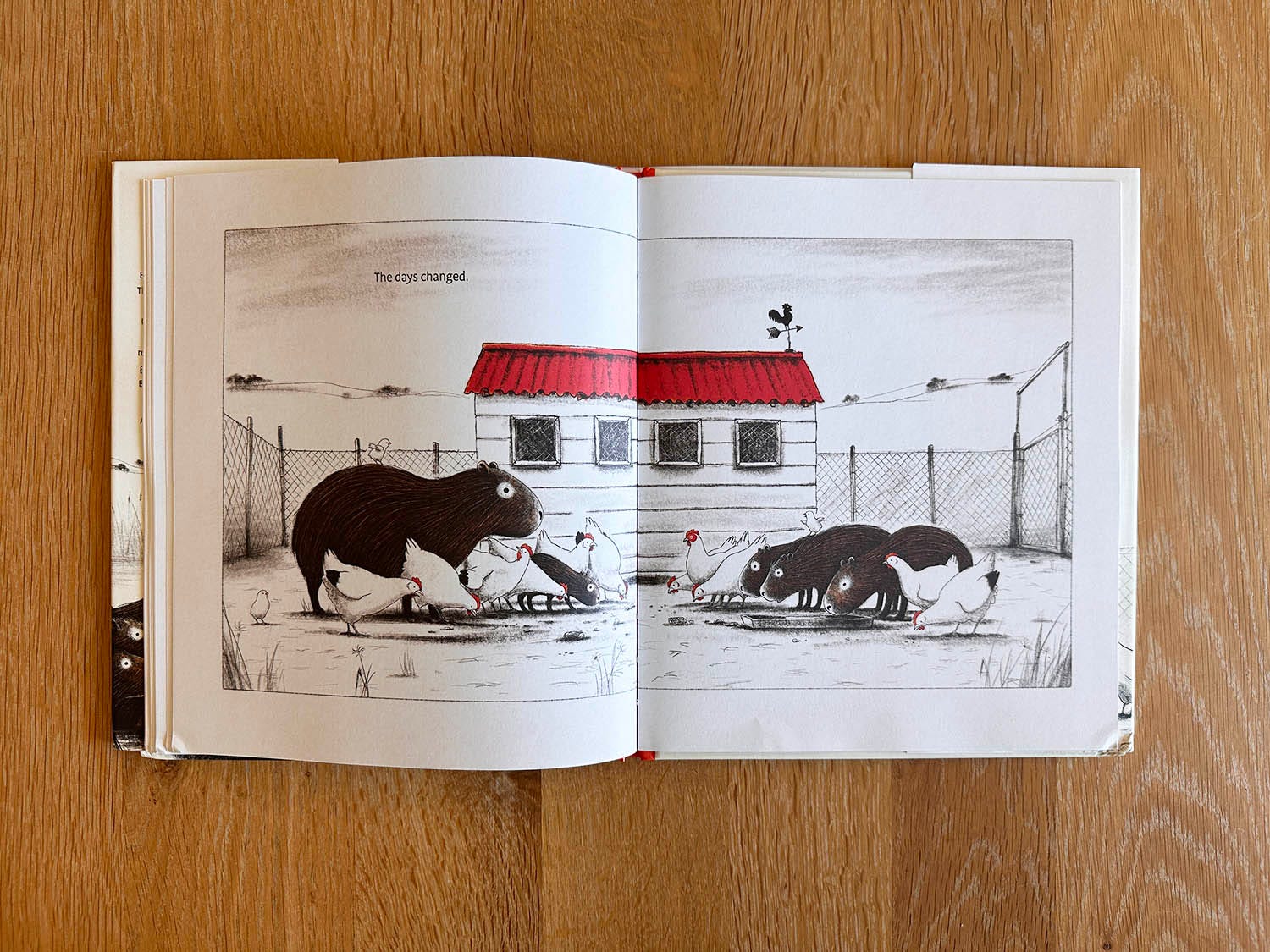
But when a baby chick befriends a baby capybara, the pair proves that neither side has to be afraid of the other. That in fact, the capybaras might even provide something of value to the chickens, in the form of protection from the mean old hound dog who terrorizes them.
Slowly, friendship blossoms!
And that’s the story, right? Case closed, yay friendship, happily ever after, the end?
Well, not exactly…

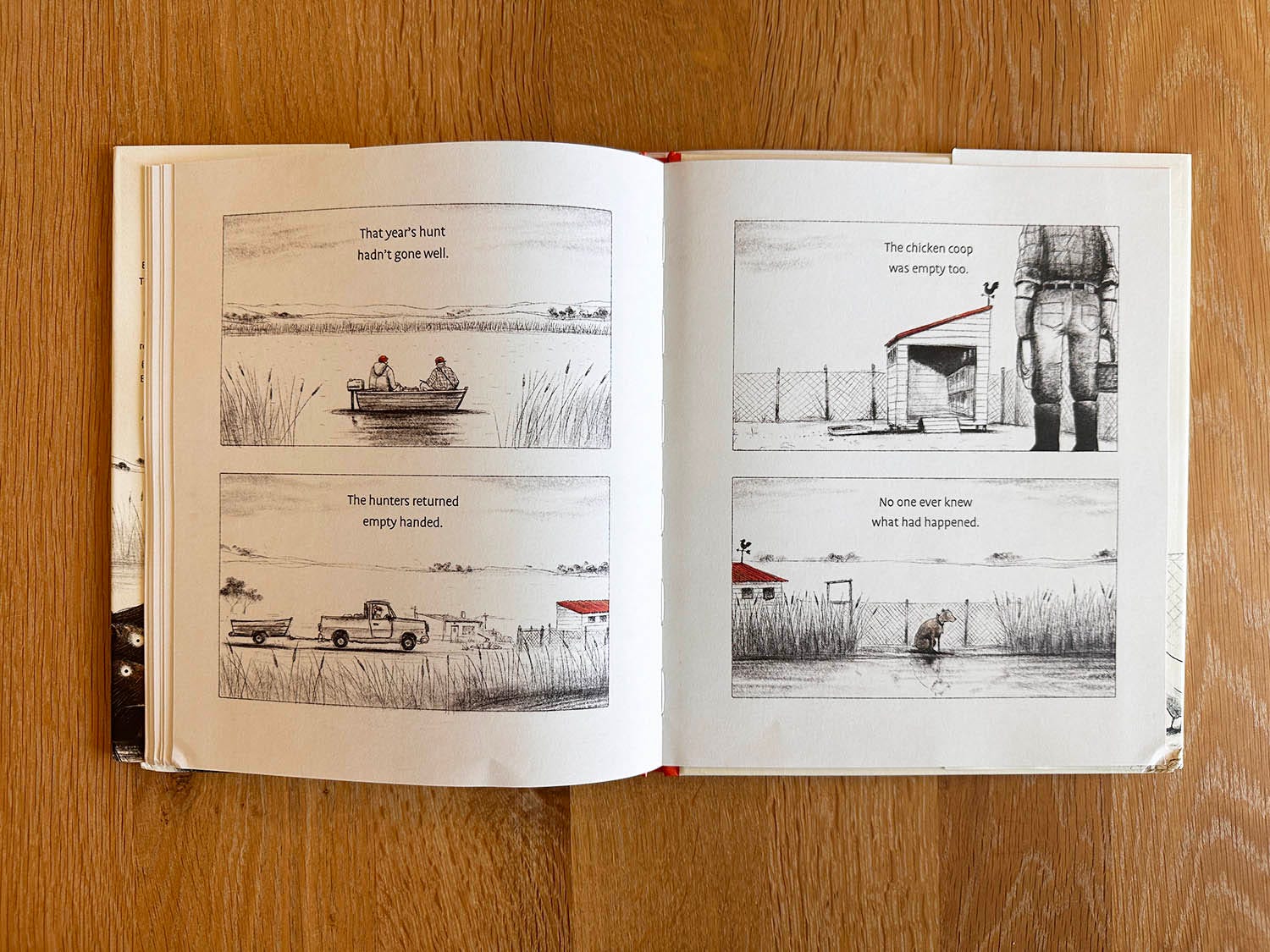
Instead, Soderguit ratchets up the tension eleven more notches by showing “that year’s hunt hadn’t gone well,” and the human hunters return empty-handed.
(And I think (eek!) we are to assume the hunters have been hunting capybara.)
But upon the hunters’ return, the chicken coop is empty.
Where did the chickens go? Where are the capybara?
In two final page turns, we get a satisfying end to this sweet tale—and one that made my 4-year-old scream with laughter.
…I’ll take a cue from Soderguit and leave you in suspense. You’ll just have to check this one out yourself!

The original version of this book was published in 2020 by Ediciones Ekare, with the title LOS CARPINCHOS.
Soderguit debuted a short animated version of the book in 2025, which has been making the rounds on the film festival circuit! I can’t find a place to watch the full film online, but a very cute trailer is here. Perhaps it still needs a distributor?

Support the makers:
Alfredo Soderguit (Instagram)
Buy your copy:
See you next week!

M E T A
In this Post: The Capybaras by Alfredo Soderguit
Keywords: Capybaras, chickens, farm, hunting, refugee, immigration, building bridges, friendship, acceptance, community, embracing differences, survival, SEL, Greystone Kids